Introduction: Screen Time and Children’s Eyes
A child today will spend more time on a screen before the age of ten than any other generation in history, and their eyes are paying for it.
“Younger children are increasingly affected, with children aged 11 to 14 averaging close to 9 hours, and nearly half of toddlers aged 0 to 2 already using smartphones,” according to a study for average screen time statistics and facts by Kutest Kids.
This shows kids are having devices shoved into their faces upon birth, causing a codependent relationship between the child and the device. This relationship leads to excessive screen time in their teenage years. Excessive screen time leads to eye strain symptoms and other eye-related diseases. The consequences for vision are only now coming into focus.
Rising Myopia and Eye Health Risks
“Myopia, aka nearsightedness, has risen in recent decades; this trend closely mirrors the expansion of screen-based tech in daily life. We have found that there is a strong correlation between an increased risk of developing myopia (nearsightedness) and the increased use of screen time. Still, no study currently proves this causation,” Dr. Aaron Gilliam, Doctor of Optometry, said.
Dr. Gilliam says that there is most definitely a relationship between myopia and screen use.
“An increase in myopia increases the risk for other ocular concerns as we age, such as retinal detachments, maculopathy, and glaucoma,” Dr. Gilliam added.
These consequences demonstrate the importance of early intervention and moderation of screen time.
Immediate Effects of Screen Use
Technology not only has long-term changes, but it also produces widespread and immediate effects that are considered normal.
“We also see an increase in dry eyes from screen use that is occurring earlier and earlier,” Dr. Gilliam noted.
This connects excessive screen use to everyday problems like dry eyes; this emphasizes a younger onset.
“Digital Eye Strain (DES): Up to 90 percent of digital device users experience symptoms like headaches and blurred vision after just two hours of continuous screen use,” stated Insight Vision Center Optometry in an article named “The Hidden Toll of Screen Time on Kids.”
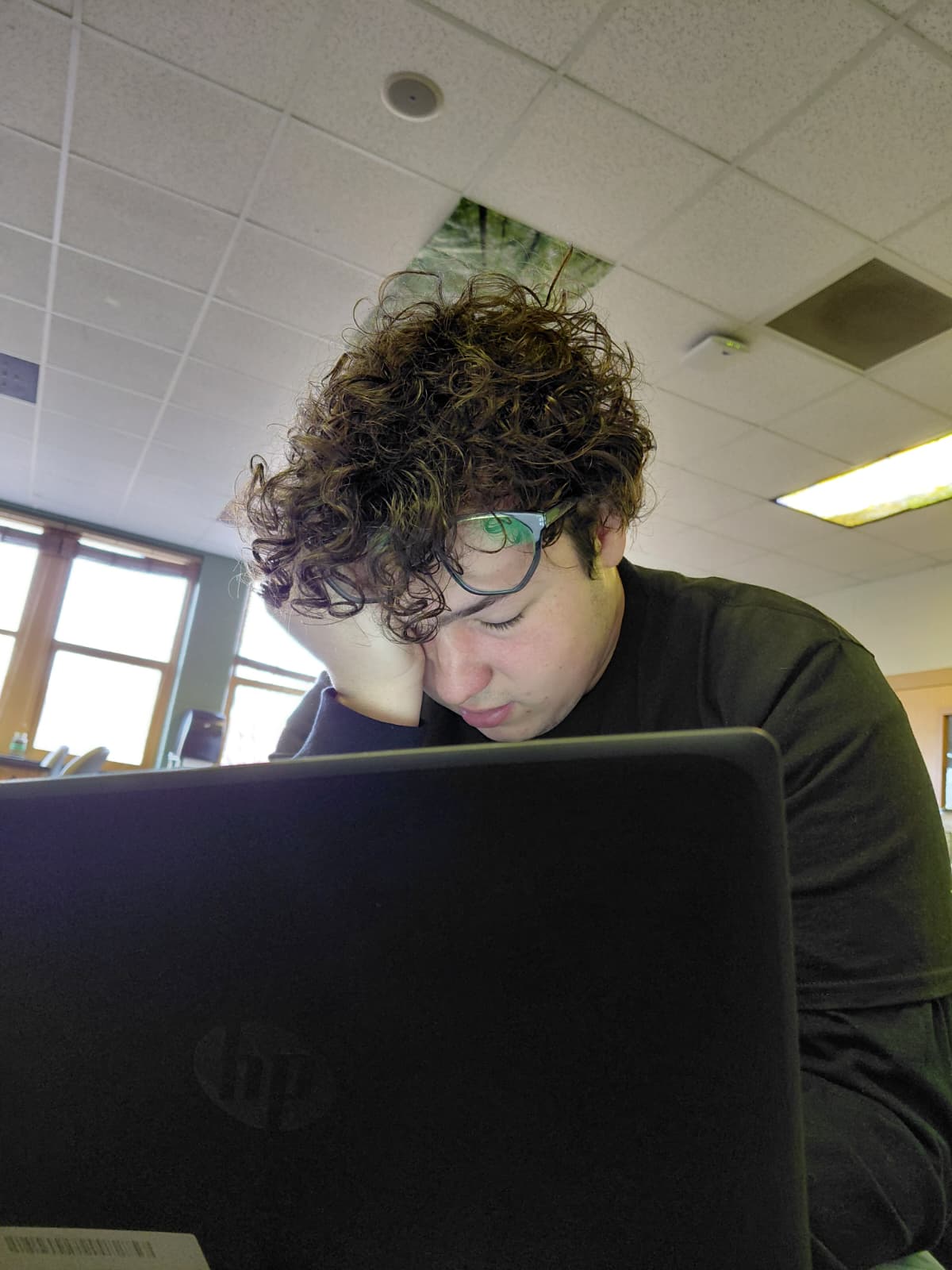
This article proves that even after a short time, as little as two hours, 90 percent of people already show DES symptoms. Kids who are already experiencing up to 9 hours a day of screen time will most definitely have short-term effects like DES, and it will lead to severe symptoms. Daily extended device usage will lead to short- and long-term effects, so they must be addressed.
Long-Term Risks
The expeditious rise in myopia is alarming, as it can cause many serious eye diseases later in life.
”An increase in myopia increases the risk for other ocular concerns as we age, such as retinal detachments, maculopathy, and glaucoma,” Dr. Gilliam added.
This indicates that digital eye strain develops into other diseases like maculopathy and glaucoma, which are often permanent and progressive, so a disconnection during these times must be necessary to prevent lifelong diseases in one of the most important organs.
“The risk of developing a retinal detachment is five or six times greater in people with high myopia (OR >20) compared to those with low myopia,” declared Daniel Ian Flitcroft, Science Direct, in November 2012. This only proves that short-term effects lead to long-term effects.
Lifestyle Solutions to Prevent Eye Damage
Eye care professionals have firsthand seen the effects of device usage on eyesight, so they have developed lifestyle changes that can protect vision.
“Increasing outdoor time and taking regular breaks from screens can significantly reduce eye strain and slow myopia progression,” according to Dr. Gilliam.
This suggests that, although life is increasingly dependent on devices, it is essential to occasionally step away from screens and go outside to prevent myopia progression.
“With the excess gadget usage, children can present with ocular surface disorders, especially dry eyes. This needs to be borne in mind, and dry eye assessment should be a part of the routine eye examination of children when specific symptoms are present. Children should again be encouraged to follow the 20-20-20 rule of taking a 20-second break to look at objects 20 ft away from their devices once every 20 min or at least after every class lecture that they sit through,” according to the article, “Managing the myopia epidemic and digital eye strain post COVID-19 pandemic—What eye care practitioners need to know and implement,” as seen in the Indian Journal of Ophthalmology from August 2020.
This suggests that a rule like the 20-20-20 rule may be a quick solution to add to your daily routine to prevent major eye diseases. Due to the high demand for technology use, it is hard to adapt to overly long device use on the eyes, but tips like the 20-20-20 rule and going offline more may be some quick solutions to add into routines.
Beyond only some immediate eye strain, overly long technology exposure could interfere with kids’ eyes and development during growth periods.
“Researchers have linked screen use to increased rates of myopia in children and teenagers. Experts believe that constant screen use may influence the growth of the eye, increasing the likelihood that myopia develops over time,” according to the Children and Screens article, “How does screen use impact vision?” written in August 2024.
“Childhood or juvenile-onset myopia begins when the human eye is still growing. “Onset most commonly occurs between 8 and 13 years, with some variation across races and populations,” stated the National Library of Medicine in the article titled “IMI—Onset and Progression of Myopia in Young Adults,” published in May of 2023.
This shows that during childhood, the eyes are still growing and are at their highest risk of myopia because of this growth.
Technology Everywhere: Devices and Screen Use
Technology is not only smartphones; it is laptops, tablets, and even classroom screens, which all affect eye health.
“Whether it’s their phone, laptop, computer, or TV, most Americans spend five or more hours each day looking at a digital device. 1. Even before remote classes, 83 percent of children spent more than 3 hours a day on a digital device. 2. These numbers are certainly higher for people working and schooling from home,” mentioned in the National Center for Health Research article named, “Digital screens can cause eye strain for children and adults. Are Blue Light Glasses the Solution?” by Amanda Chu, National Center for Health Research.
“The earlier we start, the better,” as Dr. Gilliam emphasized. This explains that children’s eyes are still developing and that early exposure has many consequences, so doctors must prevent eye problems during childhood, as it is more effective than treatment that would occur later in life. Overall, people are using devices more than ever, as they have become necessary for school and work, but we as a society should start using tactics to improve eyesight earlier rather than later.
Early Symptoms and Prevention
Many of the effects that come from excessive screen use do not only appear suddenly, but they also develop gradually, which makes early warning signs easy to overlook.
“Common signs or symptoms could be squinting, trouble focusing, eye rubbing, headaches, vision blur, burning, or itchy eyes,” claimed Dr. Gilliam.
This exemplifies that symptoms are often dismissed as tiredness or allergies, but these symptoms are more likely to indicate screen-related strain. Recognizing symptoms early may prevent temporary discomfort from evolving into major long-term vision problems.
Conclusion: Awareness and Moderation
Technology is not the enemy itself, but excessive and unmoderated use carries biological consequences that should not be ignored. “Myopia is a structural change in the actual eye. This structural change is irreversible,” as stated by Dr. Gilliam. This comes to show that we as a society must limit screen time, not exert it. As screens dominate classrooms, household routines, and homes, awareness—not feeling—will determine if this generation sees clearly in the near future.