


























Hispanic Heritage Month is a month highlighting Hispanic culture, traditions, and heritage. A quinceañera is a traditional coming-of-age celebration in Latin American cultures, marking a girl’s 15th birthday, symbolizing the transition from childhood to womanhood. My quinceañera was more than just a party; it was an unforgettable memory. Before my quinceañera, my family and I had to prepare for the party. This included finding my court of honor, booking all the vendors, and inviting all of the guests.
Quinceañera celebrations typically begin with a Catholic Mass, where the young woman gives thanks and dedicates herself to God. She may present a bouquet to the Virgin Mary and receive blessings from the priest. This spiritual component highlights the importance of faith in the life of the quinceañera and her family. For my quinceañera, I didn’t attend Catholic Mass. Instead, I decided to go to a park and take pictures with my court of honor. For my court of honor, I only had my guy friends.
One of my favorite memories with my court of honor was having choreography practice every Thursday, and afterwards just hanging out and eating. After the Mass, a reception follows with dancing, food, music, and speeches. My program started with an entrance with my court of honor and me. Three months before my quinceañera, my quinceañera court and I would practice every Thursday after school for three hours.
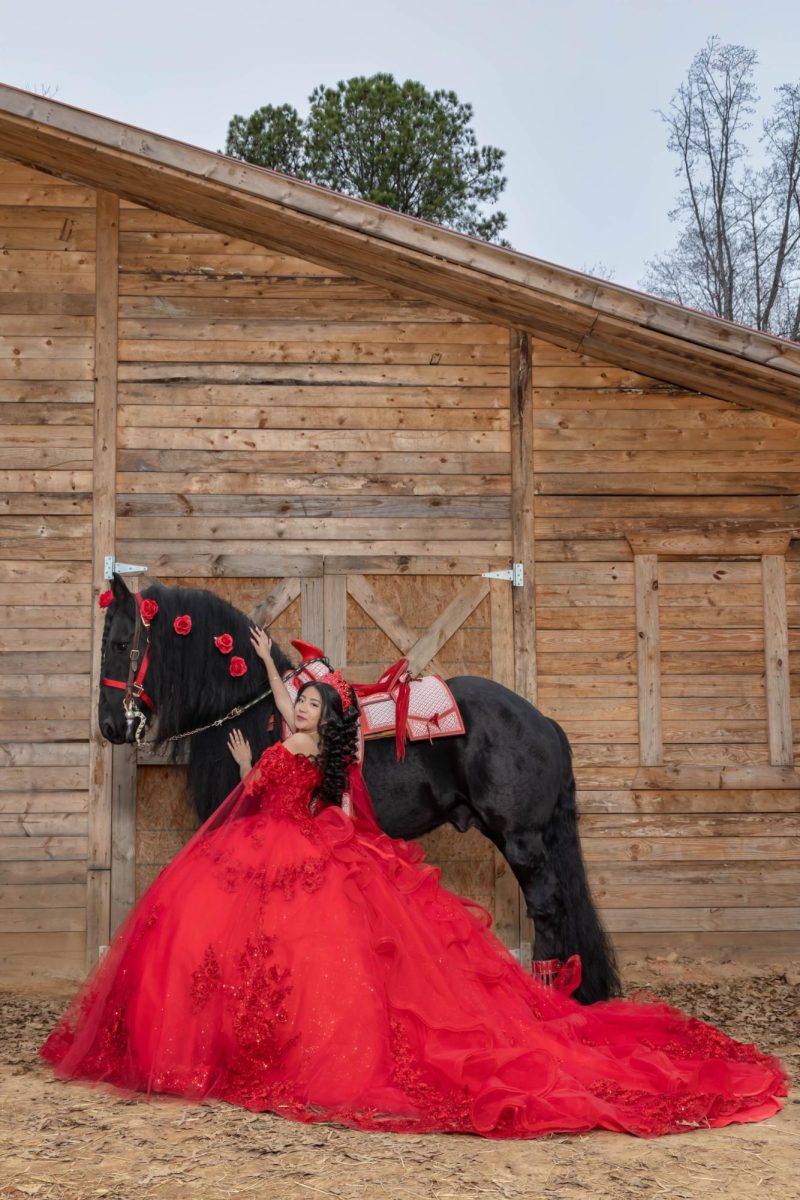
On the day of the party, the quinceañera wears a formal gown and is usually accompanied by her court of honor, consisting of damas (maids) and chambelanes (escorts), usually close friends and family. A quinceañera includes several symbolic traditions, which typically include changing the shoes: The father changes her flat shoes to high heels, representing her transition into womanhood.
The Last Doll (La Última Muñeca): The quinceañera receives or presents a doll, signifying leaving behind childhood. For my quinceañera, I decided my brother would give me my last doll; it felt meaningful and showed how special my bond with my brother is. Father-Daughter Dance: A heartfelt moment where the quinceañera dances with her father, usually to a meaningful song, symbolizing his love and guidance.
This tradition felt even more meaningful and special because I danced with both of my parents to a song that they dedicated to me. The Crowning: Some quinceañeras receive a tiara or crown, signifying that she is a “princess” in the eyes of her family and God. Many families now personalize the celebration to reflect modern values and the girl’s personality. Some quinceañeras choose themed parties, multicultural elements, or even opt for alternative experiences such as a family trip.
Regardless of how it’s celebrated, a quinceañera remains, having a powerful rite of passage and a way to honor family, heritage, and the unique journey of growing. Not only was my quinceañera a party, to me it was an unforgettable memory that I will forever be grateful for my parents did for me, regardless of how expensive it was.
