

































What types of Artificial Intelligence exist?
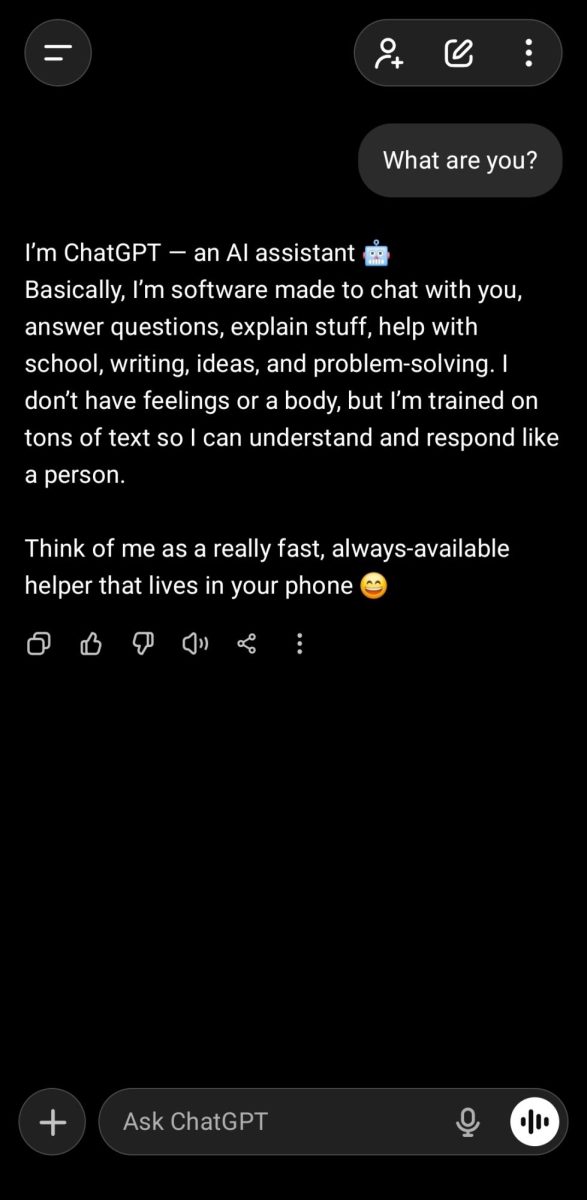
AI is short for Artificial Intelligence, but what does that mean? AI is a trained, not living, computer program that can complete complex actions or tasks that usually require much brain power with lots of time and effort. When AI is used in school and work, it simply makes your life easier and completes tasks that you push back. By learning how to use generative AI, you can make work and social interactions easier without even programming it. There are many different types of AI, including deep learning, robotics, supervised learning, reinforcement learning, transfer learning, and effective computing. AI is composed of thousands of intricate components, making it far more complex than it initially seems. Many people might have used multiple different types of AI without realizing it; however, the main type of AI that is being used more than other types is none other than generative AI. This type of AI specializes in generating unique outputs each time, such as texts, etc.
What is Artificial Intelligence?
AI follows instructions made by humans through prompts. AI learns through training, so the more it is used, the more accurate it will become in certain topics. Programs in AI will search for patterns in these prompts to make sure they are the most accurate on each topic. AI is far from flawless. Generative AI, which has gained prominence only in the last five years, remains imperfect and often relies on user input to continue learning and improving over time. Most people use chatbots to get their generative AI use. A chatbot can be used in many ways. It can speak like a human to you, using language used by humans for conversations with you. Chatbots also get you quick answers. They are 24/7 people who can help you with almost everything. Over time, they learn more about you as they speak to you.
Bill Gates’s thoughts on Artificial Intelligence.
Many billionaires are using AI to get rich, as it helps in their lives.
“AI will replace doctors and teachers within 10 years; humans won’t be needed for most jobs.” Bill Gates feels as though experts in medicine and education are rare, and it is impossible that every doctor is perfect or every teacher is perfect. Over time, AI can learn from all teachers and doctors.” Bill Gates said, “It is profound and even scary that AI is increasing in upper bound for AI.” Others think AI is making humans smarter and more efficient for this day in age, but will end up taking over many jobs later. Bill Gates said this is true, but over time, he was still optimistic about AI and thinks that the pros of AI would ultimately contribute to future technological advancements in our society.
What does IB think about Artificial Intelligence?
What does the International Baccalaureate (IB) think about using AI for research and student work? Well, to sum it up, IB believes that every student should take charge of their education, and IB helps students do this through their 4 programs. IB wants students to think critically and stand out. IB is excited by AI’s ability to enhance students’ learning experiences and provide support for students. Furthermore, AI helps students of all types think critically and creatively, allowing them to think past regular perspectives. IB believes AI can be used but should be credited in the text and referenced in the bibliography. If this notion is executed correctly, it has the potential to significantly reduce workload and stimulate more quality moments with students for educators. AI has great potential to help students learn the essential skill of how to effectively review a paper. IB is also utilizing AI in recent times, as they are still using the regular human examiner, but are also starting to use AI to detect any defects that can be made by an examiner. The IB program is willing to embrace new technology and its possibilities.
What do schools think about Artificial Intelligence?
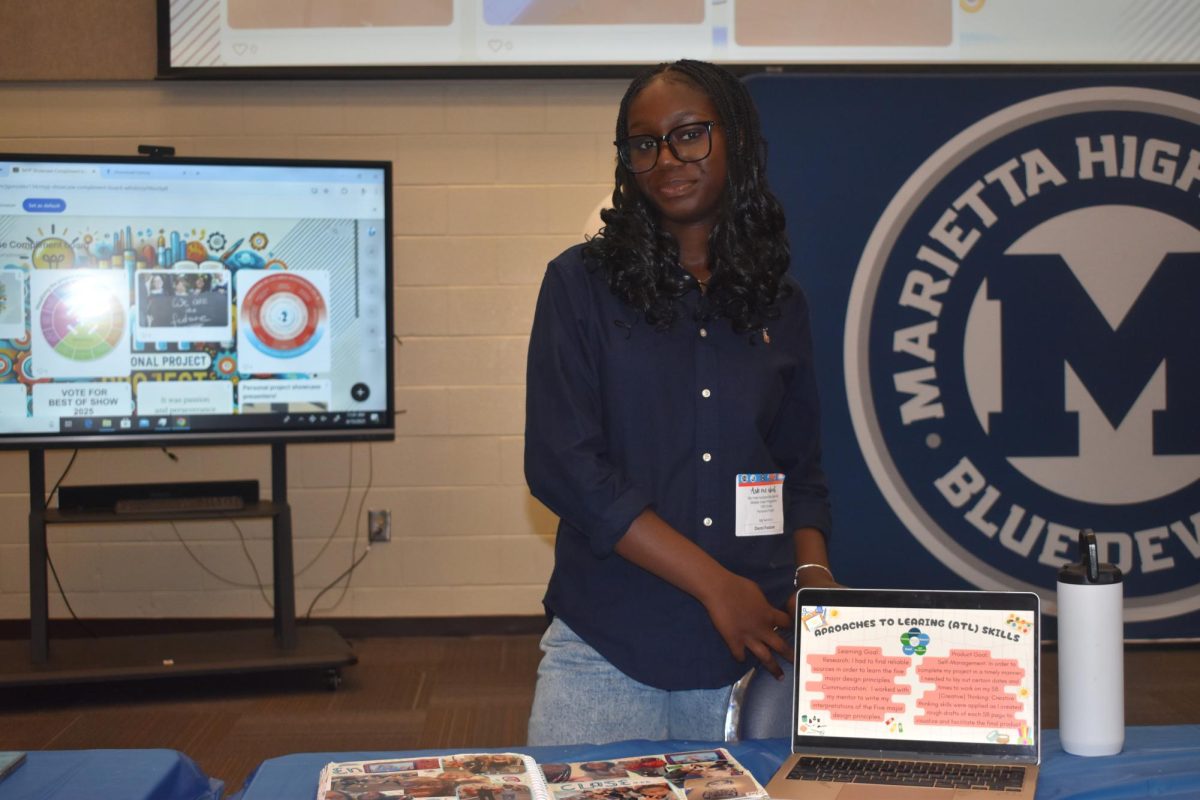
Marietta High School has an absolute zero-tolerance policy in place where using a paper not written by students and having it written by electronic resources like AI is cheating and can get you into trouble under the label of being “academically dishonest,” as the student does not authentically write it. Other schools are openly embracing the use of AI. Take the First Avenue Elementary School in Newark as an example; they have been using Khanmingo, an AI-powered learning service where students learn different topics and all students participate. Even shy students who usually dont ask many questions now do as well, which caused many students to start learning in ways never thought of before. Khanmingo is special as it creates rubrics and hooks for learning that are tailored to each student in this app. “Khanmingo gives a blueprint, but she has to deliver.” The tools from Khanmingo aren’t flawless; they struggle with pronouncing diverse names and customizing each lesson to suit individual students. Teachers need to adjust the AI’s outputs to ensure they fit the cultural and educational needs of their students properly.